
Performance Polymers Improve Midstream Pipeline and Gas Gathering Systems
J. KNAPP, Arkema, Radnor, Pennsylvania (U.S.)
(P&GJ) — The midstream transportation stage of the oil and gas industry, while fascinatingly complex, faces challenges and new updated solutions for its future. The segment of the midstream that focuses on the transport of oil and gas fluids from offshore collection sites to onshore refineries is constantly changing and demanding higher performance systems to comply with growing needs.
Within onshore transport, understanding the design and makeup of reinforced thermoplastic pipes (RTPs) and gas gathering pipe systems is critical for engineers. RTPs come in an incredibly wide variety of designs and configurations, with much consideration given to the material selection of the structure. Midstream engineers that are well-versed in material properties and differences are better suited to choose RTPs and other piping systems that outlast competition and provide maximum performance.
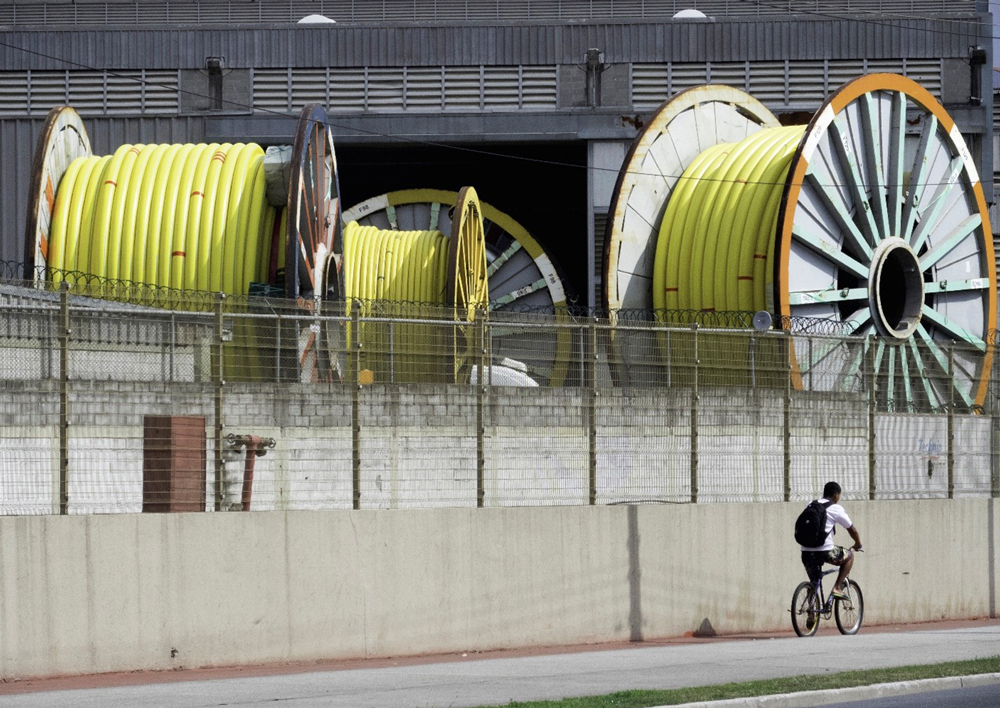
RTPs. Historically, steel pipelines make up a significant share of midstream transportation, especially within North America. RTPs offer an alternative to steel pipelines for several reasons. The increased flexibility of thermoplastic pipes allows them to be spooled, even at large diameter configurations. RTP spools can be as large as 16 ft in diameter, allowing miles of pipe to be transported and installed onsite easily. RTPs can be manufactured with a design pressure of up to 3,500 psi, making them extremely competitive even for unique projects (FIG. 1).
Joining RTP pipe is a simple mechanical process, done with basic hand tools. This simple joining process combined with the ability to be spooled also allows pipe to be more easily rehabilitated in the event of a failure. When exposed to especially aggressive chemistries, steel pipes are susceptible to corrosion and pitting, which can cause massive downtime. Selecting the correct plastic inner liner can provide a long-lasting pipeline that requires no maintenance and a system that can transport fuels effectively for decades.
RTP construction. A basic RTP is composed of two main parts: the polymer liner and a reinforcement. The liner is meant to contain the transport media, whereas the reinforcement provides the mechanical and structural integrity of the pipe. Key properties needed for a successful RTP liner are appropriate chemical resistance, mechanical strength and adequate performance at the operating temperature. Reinforcements vary depending on needed pipe strength and manufacturing capabilities. Common examples of reinforcements on flexible pipe include carbon fibers, aramid fibers and glass fibers. These fibers are chosen for their tensile strength and compatibility with epoxy matrixes on the inner liner. Many reinforcement fibers are wound tightly onto the extruded liner via spin machines.
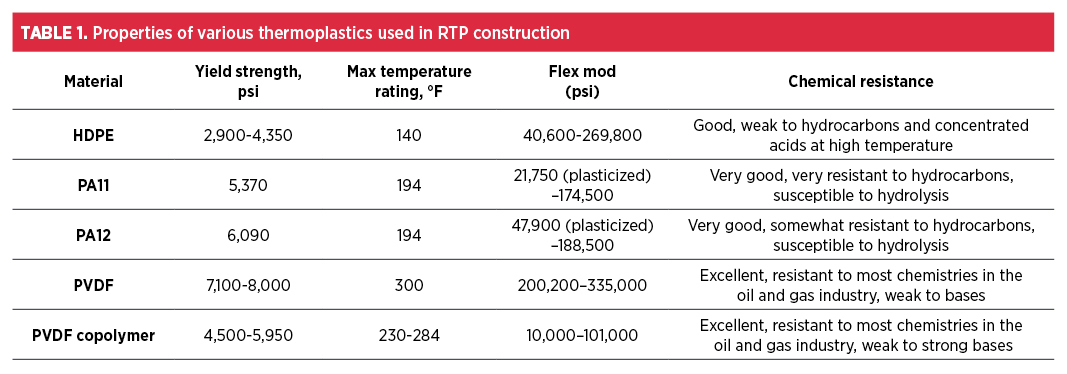
Inner liners are composed of a thermoplastic, due to its resistance to crude oils and fuels. High-density polyethylene (HDPE) is the most common liner material used today due to its availability, compatibility with hydrocarbons and low coefficient of friction. HDPE has a maximum usage temperature in these environments around 60°C (140°F). Nylon materials such as PA11 and PA12 are also commonly used. These long-chain polyamides also exhibit very good resistance to hydrocarbons and aromatics. Their tensile strength and maximum usage temperature is also higher than HDPE, able to be used up to 90°C (194°F) in RTP pipe applications. RTP liners that exhibit higher maximum temperature usage are highly desirable, as higher continuous use temperature throughout a system often enables the transport of crude oils at a lower viscosity. The midstream oil and gas industry is consistently feeling demand for higher and higher operating temperatures for RTP environments, and for this reason demand for RTPs with higher performing thermoplastics is also expected to grow.
Finally, high-performance fluoropolymers offer significantly increased performance in RTPs as an inner liner, with polyvinylidene fluoride (PVDF) being a premier choice. PVDF is a fluoropolymer that exhibits a very high tensile modulus (150,000 psi–335,000 psi as measured by ASTM D638) and is used in a multitude of applications in various markets.
Copolymerizing vinylidene fluoride (VDF) with hexafluoropropylene (HFP) monomers creates PVDF copolymers, which range in their flexibility from 10,000 psi to 101,000 psi as measured by ASTM D790. This range in strength and flexibility allows PVDF to be extruded into freestanding schedule 80 pipe or to be used as flexible tubing. Semi-flexible PVDF copolymers are typically extruded and then reinforced for RTP construction. PVDF has a maximum continuous usage temperature of 108°C (266°F) in these applications, and exhibits excellent resistance to hydrocarbons, aromatics and strong acids.1
VDF, the monomer used to create PVDF, can be manufactured from a common mineral known as fluorospar. That being said, VDF can also be created by using unused byproducts from fertilizer processing facilities, showcasing a sustainable method of producing highly durable engineering polymers.2 Unlike other fluoropolymers, PVDF does not require expensive alloys to be melt processed, preventing RTP producers from investing in expensive equipment to produce high-temperature pipe. PVDF RTP pipes have been installed and operated continuously for more than 20 yrs, even when exposed to aggressive hot hydrocarbons. TABLE 1 details the properties of various thermoplastics used in RTPs.
The American Petroleum Institute (API), which standardizes products used in onshore and offshore oil and gas processing, includes standard 15S, which focuses on design considerations for spoolable reinforced thermoplastic pipe. Within this standard there are a list of acceptable materials for inner liners, which include HDPE, PA11, PA12 and PVDF.3 Multi-layer extrusions with different plastic layers are also possible, with functionalized tie layers acting as an adhesive between the two plastics. Multi-layer extrusions are most often used when an extra liner material is needed for chemical or permeation resistance.
Gas gathering pipe. As with RTPs, steel is a commonly chosen material for natural gas gathering pipe. However, in certain conditions, the same problems that befall steel pipes can affect them here as well. Pitting and corrosion in steel gas pipe can cause massive failures and downtime, and costly corrosion elimination methods such as electropolishing may not always be feasible. Finally, demand for lower cost materials and systems often have engineers looking for materials that can perform similarly for gas transport but with a lower overall cost. Polymer piping systems are applicable in this sector of the midstream industry as well. Polymers commonly used in natural gas gathering pipe include HDPE, polypropylene (PP) and polyamides.
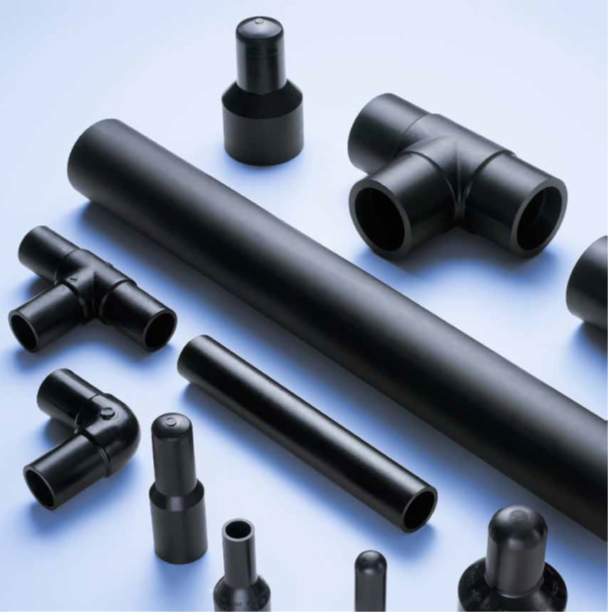
For natural gas pipe, PA11 is a common option as a steel replacement. As mentioned previously, PA11 is a highly hydrocarbon and permeation resistant polymer. PA11 is in the polyamide family, commonly known as nylons. PA11 is a long-chain polyamide, exhibiting excellent mechanical properties and able to be extruded as a pipe. PA11 is a uniquely bio-based polymer. The amino 11 monomer is gained from castor oil, which in turn is made from the castor bean. This is a fully bio-based polymer that is still able to be used in chemically harsh environments in an increasingly scrutinized industry. PA11 piping systems can be used under pressure up to 315 psi and held up to 80°C (176°F) continuously. The material can be butt welded, similar to polyethylene (PE), and injection molded valves and fittings are also available to the oil and gas market. The hydrocarbon and permeation resistance of PA11 pipes enable them to be used continuously in gas gathering pipe systems, with minimal to no maintenance compared to steel pipes (FIG. 2).
PA11 piping systems can perform at operating temperatures and pressures higher than HDPE pipes, with an overall lower cost of ownership than steel piping systems. As HDPE piping systems are typically not recommended for regulated gas distribution more than 125 psi, PA11 is most commonly used and recommended for operating pressures between 125 psi and 250 psi as a higher performing material than HDPE.
ASTM D2837 established the long-term hydrostatic stress performance of materials used in pressurized pipe. Performing excellently in this test, PA11 has established a hydrostatic design basis (HDB) of up to 3,150 psi at 23°C (73°F), as listed in the Plastic Pipe Institute TR-4.4 This allows the material to be used safely in higher temperature applications such as steam lines. The ASTM 1473 test measures slow crack growth (SCG) of plastic pipes and resins. At a stress of 350 psi at 80°C (176°F) and more than 2,000 hr, no failures were found in the PA11 pipe.5 TABLE 2 gives an overview of operating pressures for PA11 pipe in various standard dimension ratios (SDRs) and temperatures in gas gathering, multiphase and low-vapor pressure water services.
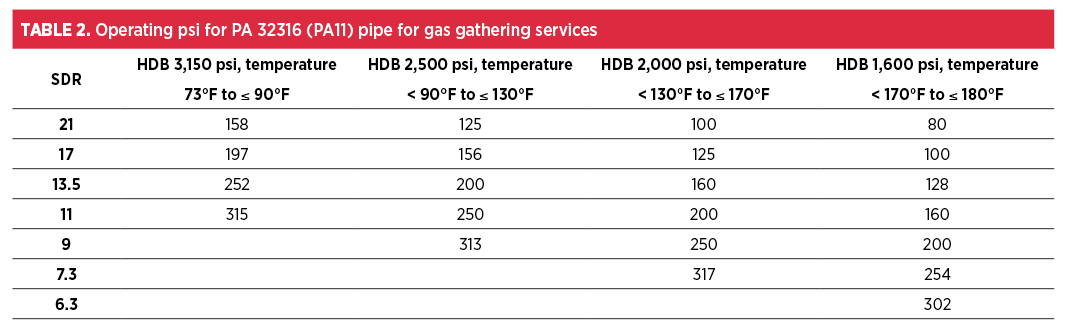
Note: A design factor (DF) of 0.5 is recommended for systems carrying dry gaseous hydrocarbons, wet gases containing aliphatic hydrocarbons and water. For systems with high aromatic hydrocarbons, an additional DF of 0.5 is recommended.
Takeaway. Within the midstream transportation industry, maintaining a cost-effective yet long-lasting and high-performance system is a difficult endeavor. Knowledge of available materials for transport systems such as RTPs and gas gathering systems are valuable tools that can benefit engineers designing a new pipeline. Higher performing thermoplastics, such as PVDF and PA11, can be used as liners in RTPs or freestanding pipe systems that can operate at 130°C (266°F) and 90°C (194°F), respectively, all at lower installation and maintenance costs than conventional metallic systems. These durable and sustainably sourced materials highlight the strengths of the midstream transportation industry and point to areas it can grow into.
LITERATURE CITED
1 McCourt, M., et.al., “The performance of PVDF in fuel handling applications,” ANTEC, 2006.
2 Arkema, “Arkema announces an innovative partnership in the United States for the supply of anhydrous hydrogen fluoride, the main raw material for fluoropolymers and fluorogases,” 2020, online: https://www.arkema.com/usa/en/media/news/global/corporate/2020/20200603-arkema-signe-un-a/
3 API, “API specification 15S: Qualification of spoolable reinforced plastic line pipe,” 2022.
4 Plastics Pipe Institute (PPI), “PPI TR-4: HDB/HDS/SDB/PDB/MRS listed materials,” 2024.
5 ASTM International, “ASTM F1473-18: Standard test method for notch tensile test to measure the resistance to slow crack growth of polyethylene pipes and resins,” 2018.
ABOUT THE AUTHOR
JASON KNAPP is a business development engineer for Arkema’s Kynar® PVDF and Kepstan® PEKK materials. He has been with Arkema for 3 yrs and focuses on oil and gas applications for fluoropolymers. Knapp is a member of ASME, AWS and API standards committees, and has authored numerous articles in magazines such as Materials Performance and Wire and Cable Technology International on Arkema’s high-performance polymers.