
Material Engineering for Safe, Efficient Hydrogen Compression in Pipeline Systems
K. DRAKE, Greene Tweed, Lansdale, Pennsylvania (U.S.)
(P&GJ) — Hydrogen (H₂) is progressing from a future concept to use in commercial infrastructure, and this shift is exposing material and design challenges that conventional natural gas components were not built to manage. As operators look to blend H₂ into existing networks or build dedicated transmission systems, performance expectations for compressors, valves and sealing elements have shifted. Reliability is critical because H₂ behaves unlike other industrial gases. It permeates more readily, escapes through microscopic pathways, imposes harsher pressure and temperature cycles, and provides almost no lubricity for moving parts. These characteristics place conventional elastomers, thermoplastics and metal components under considerable mechanical and chemical stress.
Building reliable H₂ infrastructure requires materials and products engineered specifically for H₂’s molecular behavior and mechanical loads, supported by design strategies that account for motion, pressure, temperature and component interaction. Industry efforts are increasingly focused on developing such solutions by combining elastomers, thermoplastics, composites and the use of advanced modeling tools to help operators reduce leakage, extend component life and support the safe scaling of H₂ pipeline systems.
Why H₂ behaves differently. H₂ is the smallest molecule—its small size allows it to permeate more rapidly than other gases through polymer matrices/chain aggregates and escape via hole hopping in the existing free volume present in any polymer system. In addition, the H₂ molecule’s lack of lubricity presents major challenges for reciprocating compressors that must operate without lubricating oils to prevent contamination of the gas stream. In such environments, piston rings and wear bands experience significant friction loads, and unsuitable materials can degrade rapidly.
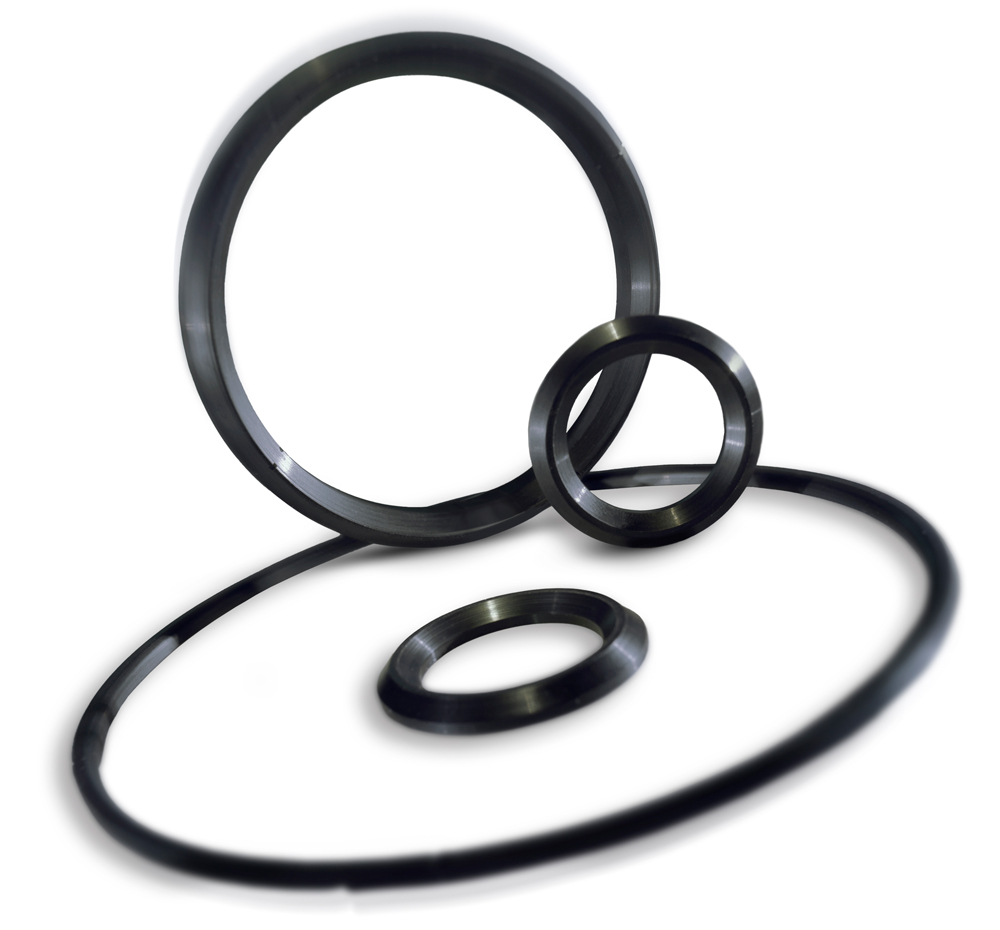
Another challenge of H₂ systems is that they often operate across wider temperature and pressure ranges than those seen with the infrastructure of other industrial gas facilities. In dispensing and storage, pressures often reach 700 bar at temperatures around –40°C (–40°F). Compression stages can have gas temperatures that exceed 150°C (302°F) and liquid H₂ introduces extreme cryogenic conditions close to –253°C (–423°F). Materials must therefore maintain flexibility, toughness and sealing capability across one of the broadest operating ranges in industrial service (FIG. 1).
H₂’s low molecular weight also introduces new challenges in centrifugal compression. Achieving meaningful compression requires far higher tip speeds than those used for air or natural gas. Unfortunately, as the tip speed increases, stress on impellers increases sharply. At the tip speeds required for H₂, metal impellers can exceed their mechanical strength limits, making centrifugal H₂ compression challenging for traditional metal designs. Taken together, these factors create a demanding environment that explains why conventional elastomers, polyimides, polytetrafluoroethylene (PTFE) blends and metal components are sometimes unsuitable for H₂ service and require specialized materials engineering or special designs for success.
Pipeline compression and transport considerations. In pipeline transport, these H₂-specific behaviors place specific demands on compression systems. Unlike point-of-use compression in industrial processes, pipeline compression stations are designed to maintain flow and pressure over long distances while responding to variable demand and operating conditions. H₂’s low molecular weight and high diffusivity mean pressure losses can occur more rapidly than with natural gas, increasing the reliance on compression stations to stabilize system performance. These stations must operate across a wide range of pressures and temperatures, often cycling between steady-state operation and transient conditions during startup, shutdown or load changes. As a result, compressors, valves and sealing elements within pipeline compression stations are exposed to repeated mechanical and thermal cycling that can accelerate wear and increase the risk of leakage if components are not engineered specifically for H₂ service.
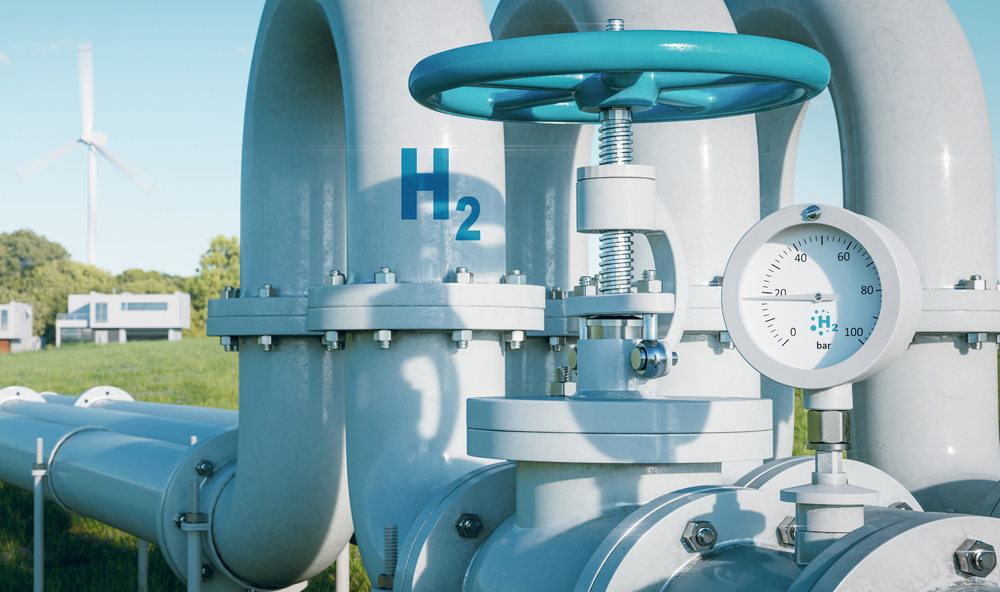
Compression stations also represent critical reliability nodes within H₂ pipeline networks. Valves, seals and dynamic components at these locations experience some of the most demanding service conditions in the entire transport system, particularly where pipelines traverse remote or difficult to access areas. Unplanned shutdowns at compression stations can disrupt H₂ delivery across large sections of a network, making component reliability and predictable maintenance intervals especially important for operators. In this context, material performance directly influences both operational safety and total cost of ownership. Components must withstand pressure cycling, temperature variation and H₂ permeation over extended service life while maintaining sealing integrity to minimize losses and reduce the likelihood of unscheduled intervention (FIG. 2).
Where traditional materials fall short. Components of H₂ compressors and valves tend to fail for predictable reasons. Standard elastomers can crack or blister during rapid decompression, which is common during high-pressure cycling. H₂ exposure can embrittle metals, increasing the risk of sudden fracture. PTFE-based valve seats may deform or flatten at high temperatures and pressures (creep), preventing reliable opening and closing. Polyimides and polyamide-imides, although strong at elevated temperatures, can absorb moisture and soften or lose structural integrity in conditions commonly seen in H₂ generation or compression. Long-term creep as a result of time, temperature plus environmental challenges further reduces the life expectancy of other polymers.
These various failure mechanisms (creep, combined with chemical and thermal effects) can lead to leakage, reduce maintenance intervals (more frequent change-outs needed) or lead to unplanned complete equipment shutdown. For pipeline systems, such issues are costly and potentially unsafe. Because most H₂ standards are still evolving, operators cannot rely solely on prescriptive material lists or design frameworks. As H₂ standards continue to evolve, operators must rely on engineering experiences rather than prescriptive codes to ensure material suitability.
Material platforms designed for H₂. To address many of these challenges, a custom suite of elastomers, thermoplastics and composites have been developed specifically for H₂ service. High-temperature fluoroelastomers (FKMs)a provide resistance to rapid gas decompression while maintaining mechanical performance up to 232°C (450°F). For very low temperatures, an ultra-low-temperature ethylene propylene sealing solutionb maintains sealing capability as low as –55°C (–67°F) and is suitable for dispensers, storage systems and valves subjected to aggressive pressure cycling.
Cross-linked polyetheretherketone (PEEK)-based thermoplastics represent another important material family. Platformsc based on patented cross-linking approaches have been formulated to improve creep resistance and long-term dimensional stability under combined temperature and chemical exposure, especially in environments where polyimides tend to soften or degrade. For wear-intensive components, such as piston rings in reciprocating compressors, lubricated cross-linked PEEK gradesc offer enhanced wear resistance for non-lubricated H₂ service. For applications requiring greater stiffness at elevated temperature, including valve seats and sealing components, glass-filled cross-linked PEEKd delivers improved high-temperature creep resistance.
Each of these materials has been designed for a specific combination of temperature, pressure, motion and chemical exposure, reflecting the wide range of conditions across H₂ infrastructure.
Composite impellers for centrifugal compression. As previously discussed, centrifugal compressors face unique challenges due to the high tip speeds required to compress H₂. Traditional metal impellers are constrained by density and tensile strength where the required tip speeds may exceed the tensile strength of the metal and induce catastrophic failure. Composite materials offer an alternative by reducing impeller mass and thus allowing higher rotational speed. Using specialized processing approaches, composite impeller designs have been demonstrated at tip speeds up to 688 meters per second, enabling centrifugal compression in applications where metal designs reach structural limits. This supports centrifugal compression in applications where metal designs become overstressed and can also reduce the number of stages required, enabling more compact and lighter compressor configurations.
Performance verified through predictive modeling and testing. With H₂ specific standards still emerging, rigorous testing and simulation play an essential role in material selection. As part of U.S. Department of Energy (DOE) H₂ testing programs conducted through U.S. national laboratories, some materials have been subjected to pressure cycling up to 870 bar to evaluate permeation, swelling and mechanical degradation under realistic conditions. Additional qualification has also been performed under International Organization for Standardization (ISO) 17268 for refueling station elastomers and ISO 23936 for rapid gas decompression (RGD) and fluid aging.
Predictive tools, including finite element analysis with advanced material models, computational fluid dynamics and lifetime modeling, complement empirical physical testing. These methods enable engineers to estimate wear rates, maintenance intervals and deformation patterns before building physical prototypes, helping ensure accurate performance in pipeline systems.
Case studies demonstrating material improvements. Operational experience highlights the benefits of selecting materials specifically engineered for H₂. In one application involving pure-H₂ valve seats operating between 45°C (113°F) and 150°C (302°F), standard PTFE- and PEEK-based materials flattened or fused shut due to compressive creep load. A lubricated cross-linked PEEK grade sealing componentc was evaluated as an alternative and was the only material to pass the deformation-under-load test. It retained its shape and sealing capability, preventing the valve from sticking and supporting safe operation.
In compressor environments, a lubricated grade designed for wear and friction applicationse has demonstrated superior wear resistance vs. competitive materials, which should translate to enabling longer periods between maintenance intervals. Composite impeller development is progressing through field validation, and early results confirm its high-speed capability provides a clear advantage in addressing the limitations of metal components.
Impact on reliability and total cost of ownership. H₂ pipelines introduce risk at every point where sealing integrity is required. Leakage reduces efficiency and raises safety concerns, as H₂ is highly flammable and diffuses rapidly with improperly selected materials and/or designs. The cost of lost H₂ and unplanned shutdowns accumulates quickly. By improving wear resistance, creep behavior, chemical stability and permeation control, engineered materials directly influence reliability. Longer lifetimes for seals, wear components and valve seats can reduce the number of service interventions required and lower overall operational cost. Improved dimensional stability ensures consistent valve actuation, reducing downtime and improving system availability. Composite impellers extend design boundaries for centrifugal compression and support more efficient system layouts.
Building on cross-industry experience. Work in H₂ must increasingly draw on decades of experience from other demanding sectors, including semiconductor processing, aerospace, and oil and gas production. Established quality systems support material traceability and consistency from formulation to finished component, while cleanliness practices developed for semiconductor applications are highly relevant to H₂ generation and conversion, where metal extractables can poison catalysts in electrolyzer and fuel cell systems. The combination of chemical expertise, material science, mechanical design and testing capability forms the basis of this integrated development model, enabling early understanding of failure modes and supporting accurate simulation and physical validation.
Supporting the transition to H₂ infrastructure. As H₂ infrastructure grows, the sector will rely increasingly on tailored materials, cross-disciplinary engineering and application-driven component design. Effective sealing and component solutions must consider permeation, wear, rapid cycling, embrittlement and extreme pressure temperature combinations. Experience in demanding environments—coupled with sophisticated modeling tools and H₂-focused material platforms—contributes to safer and more reliable systems. Until standards become fully established, engineering judgment remains essential in ensuring that components meet the unique operational demands of H₂ compression and pipeline transport.
NOTES
a Greene Tweed’s Fusion 938
b Greene Tweed’s EPM 893
c Greene Tweed’s Arlon 3000XT
d Greene Tweed’s Arlon 3160XT
e Greene Tweed’s Arlon 3555XT
About the author
KERRY DRAKE is an experienced technical leader, responsible for building and leading global cross-functional teams for research, development and commercialization of new polymer technologies and new products in aerospace, semiconductor, energy and life sciences markets. Dr. Drake is an inventor on multiple granted patents in polymers, coatings and elastomeric products, and has presented at several international conferences on polymer chemistry and materials science. Drake earned a BS degree from Bucknell University and an MS degree from the University of Michigan, both in chemistry. He also earned a PhD in polymer chemistry from Drexel University.