
What Is a Remotely Operated Inline Isolation Tool? Part 1
F. SOENDERVIK, Pipeline Ultraisolation Group (PLUG), Houston, Texas (U.S.)
Pipeline systems form the backbone of global energy infrastructure, transporting hydrocarbons and other fluids over long distances. When maintenance, repairs or tie-ins are required, that section of pipeline must be isolated. Traditionally, this has meant shutting the system down and depressurizing, which leads to lost production, increased cost and often complicated logistics.
Inline isolation technologies (IITs) offer a different approach. They allow operators to isolate a section of pipeline while the rest of the system remains live. From an operational standpoint, this is a major advantage but also introduces a different set of challenges. Operators are now dealing with seals under pressure, localized stress on the pipe and much tighter margins for error.
The development of remotely operated IIT goes back to the 1990s. Early systems relied on a hydraulic umbilical to actuate the tool, which worked but came with obvious limitations. Running long lengths of hose inside a pipeline was not only impractical but also restricted how far the tool could be deployed.
This challenge led to the development of a communication system capable of transmitting control signals and pings through the pipeline environment. The breakthrough came with the use of extreme low frequency (ELF) signaling, enabling usable communication without physical connections. This innovation marked the emergence of the first remotely operated IIT. The ELF system and its technical principles will be explained in details in Part 3 of this series.
Despite being used for more than three decades, remotely operated IIT remains relatively underrepresented within the broader pipeline industry. Early adoption was largely concentrated in offshore applications, where pipeline wall thickness and structural robustness were more accommodating. Throughout the past decade, deployment has expanded into onshore systems; however, thinner wall pipelines present additional engineering challenges. These include increased susceptibility to localized stress and deformation induced by the isolation tool, issues that must be mitigated through pressure management strategies or the application of external reinforcement, such as structural clamps.
Historically, IIT were costly and predominantly used in European markets. Throughout the last 5 yrs–10 yrs, however, advancements in design, manufacturing and operational methodologies have significantly reduced costs. As a result, IIT has become not only competitive with traditional methods but, in many cases, more economical.
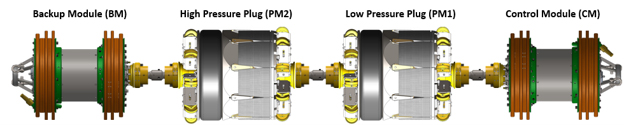
Publicly available technical information on IIT remains limited. Industry understanding is often limited to vendor-led presentations or “lunch and learn” sessions. This article series aims to address that gap by providing an overview and better understanding of IIT. It will examine the core system architecture, including the plug module (PM), control module (CM) and backup module (BM), as well as the underlying ELF communication system that enables remote operation (FIG. 1).
The Process
The IIT of pressurized pipeline systems is a critical operation across the oil and gas, petrochemical and broader energy transportation sectors. As infrastructure ages and regulatory oversight intensifies—coupled with increasing demands for operational efficiency and environmental focus—the capability to safely isolate sections of live pipelines without full system shutdown has become essential.
This article series will address the engineering fundamentals of IIT, including mechanical design concept, sealing mechanisms, tool components and ELF signaling within pressurized systems. It also addresses operational methodologies and risk management required to execute these projects safely in high-consequence environments. Focus is given to potential failure modes, the implementation of safety barriers and industry best practices for maintaining system integrity during deployment.
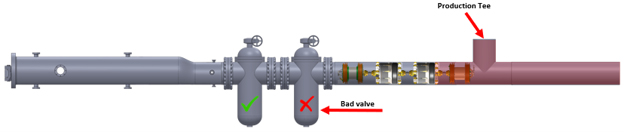
Part 1 outlines the typical workflow initiated when an operator identifies the need for pipeline isolation. Consider a scenario in which a pipeline operator is experiencing leakage at a launcher valve. Operational constraints prohibit system shutdown, and the operator is unwilling or unable to install a welded fitting due to space limitations or long-term integrity concerns. Increasingly, industry practice is trending away from leaving permanent welded fittings on pipelines due to potential future risks, including corrosion, stress concentration and regulatory implications.
Once isolation is required and a plugging vendor is engaged, a structured engineering and execution process is initiated. The following sections will detail this process, from initial data gathering and feasibility assessment through tool selection, deployment planning and execution under live pipeline conditions.
FIG. 2 shows an example of an IIT isolating pipeline pressure, allowing the customer to repair or replace a failed launcher valve while production remains in service.
Data Collection
The first step in the IIT process is the systematic collection and verification of pipeline data. This typically begins with a detailed engineering questionnaire issued to the client, designed to capture all critical parameters the IIT will encounter during both the pigging and isolation phases. Key data includes pipeline geometry, internal diameter (ID) tolerances, wall thickness, material grade, operating pressure and temperature, product composition, drawings, piping and instrumentation diagram (P&ID), alignment sheet, inline inspection (ILI) data and the presence of any internal restrictions or features. At this stage, most plugging vendors will issue a preliminary quote.
After receiving this information, the assigned engineer conducts a site visit at the proposed isolation location. The purpose of this visit is twofold: to validate the accuracy of the data provided and to confirm that existing drawings and records accurately reflect field conditions. In practice, discrepancies between documented and actual pipeline configurations are common.
Pipeline records are often outdated or incomplete. Dimensional inaccuracies, undocumented field modifications and component substitutions are regularly encountered. For example, valves with differing internal diameters may have been installed without corresponding updates to pipeline drawings, creating potential restrictions that could impact tool passage or sealing performance. Similarly, changes in fittings, bends or branch connections may not be reflected in official documents.
As a result, field verification is a critical step in mitigating risk. Accurate and validated data forms the foundation for tool selection, mechanical design verification and overall execution planning. Failure to identify discrepancies at this stage can lead to operational delays, tool malfunction or, in worst case scenarios, compromised isolation integrity.
Calculations
Following the site visit and data validation, the engineer performs a detailed feasibility assessment to determine whether an IIT can be safely deployed at the proposed location. This evaluation is mostly centered on pipe stress analysis and structural integrity under isolation stress conditions.
The analysis is based on key parameters including operating pressure, pipe wall thickness, material grade, diameter and the localized stresses induced by the isolation tool, particularly those associated with sealing elements and anchoring mechanisms (grips/slips). The objective is to ensure that the combined stresses remain within allowable limits, preventing yielding. A safety factor is that one isolation module should be able to take the full load (stress) if one of the modules fails without yielding the pipeline.
In cases where the initial stress calculations indicate that stress limits may be exceeded, mitigation strategies can be implemented. Common approaches include temporarily reducing pipeline operating pressure to lower the applied stress during isolation, or installing a temporary external structural clamp to reinforce the pipe and re-distribute stresses at the isolation point.
This engineering verification step is critical to ensure that the isolation can be performed without compromising pipeline integrity or safety.
Pigging Study
The next step in the process is the execution of a detailed piggability study. In this phase, both the IIT and the pipeline are modeled typically using 3D computer-aided design (CAD) and simulation software to evaluate whether the tool can be safely pigged to the intended isolation set location.
This analysis addresses the tool’s ability to navigate the pipeline geometry, including bends, changes in diameter, valves, tees, wyes, check valves and fittings, and any known restrictions. Critical factors such as minimum bend radius, internal clearances, component articulation and potential interference points are evaluated to ensure that the tool can pass through the system without obstruction or damage. The study also considers frictional forces, pigging conditions and overall safe pigging operations.
The objective is to confirm that the tool will not encounter conditions that could lead to stalling, mechanical interference or loss of control during deployment.
Once both the structural integrity assessment (stress analysis) and the piggability study have been successfully completed and validated, the project can proceed to the commercial stage. At this point, the operator is presented with a formal proposal outlining the technical approach, operational scope and execution plan for the IIT.
Documentation/Drawings
Upon contract award, the project transitions into detailed engineering and documentation. At this stage, all technical deliverables required to support safe and compliant execution of the IIT operation are developed.
The engineering team generates a comprehensive documentation package, which typically includes, but is not limited to:
- Stress analysis report: Verification that pipeline stresses under isolation conditions remain within allowable limits
- Piggability study report: Confirmation that the tool can be safely conveyed through the pipeline geometry
- Risk assessment: Identification and evaluation of potential hazards, including mitigation measures and defined safety barriers [e.g., hazard identification (HAZID), a hazard and operability study (HAZOP), task risk assessments]
- Tool drawings and general arrangement (GA): Detailed mechanical drawings of the IIT and its configuration for the specific application
- Checklists: Pre-deployment, operational and contingency checklists to ensure procedural compliance
- Factory acceptance test (FAT) procedures: Defined test protocols to verify tool functionality and performance prior to mobilization
- Operational procedures: Step-by-step execution plans covering deployment, setting, verification of isolation, monitoring and retrieval
- Design premise: A document defining the basis of design for the isolation operation, including pipeline data, operating conditions, isolation requirements, tool selection criteria, assumptions, limitations, acceptance criteria and applicable codes, standards and project-specific requirements.
All documentation is compiled into a controlled package and submitted to the operator for technical review and approval. This review process ensures alignment with client specifications, regulatory requirements and site-specific constraints before field execution begins.
Assembly
Following the approval of the engineering documentation, the tool assembly phase can begin. Trained technicians assemble the IIT in accordance with the approved engineering drawings and specifications.
All components are selected from pre-serviced and inspected inventory, with full traceability maintained through serialized parts and material records. This ensures that each component meets quality requirements and can be tracked throughout the project lifecycle.
During assembly, the tool is checked against the engineering drawings and subjected to a comprehensive assembly checklist. This process confirms correct configuration, proper installation of critical components and overall mechanical integrity.
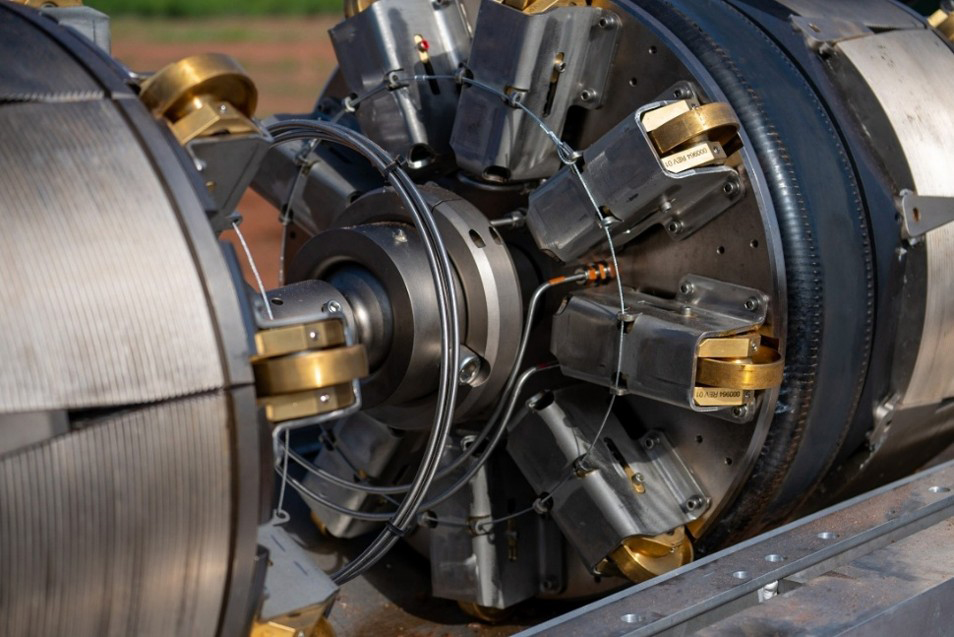
For the FAT, handling and preparation purposes, the tool is fitted with temporary support discs and minimal wheel configurations. Upon completion of the assembly checklist, the tool is ready for the FAT, marking the transition from assembly to functional validation (FIG. 3).
FAT
The FAT represents the final verification stage prior to field deployment. Clients are invited to witness the FAT in person, and where required, an independent third-party inspector is engaged to validate compliance with project specifications. Upon completion, the third-party reviews and endorses the FAT documentation.
Where physical attendance is not feasible, the FAT can be watched remotely using live streaming technology. Clients are provided with access to real-time data acquisition systems, including data loggers, tool instrumentation and live video feeds, enabling full transparency during testing.
The IIT is pushed into a test pipe that closely replicates the target pipeline’s specifications, including diameter, wall thickness and material properties. In some cases, the client supplies an actual section of pipeline to ensure maximum fidelity between test conditions and field conditions.
The FAT procedure is designed to simulate the full operational sequence under controlled conditions. The tool is set in accordance with the approved operating procedure, replicating field execution as closely as possible. Once set, the tool is held under pressure for a predefined duration specified by the client. Industry practice typically requires a minimum isolation period of 4 hrs, although extended durations up to 24 hrs or 48 hrs are common. An overnight hold is frequently preferred, allowing for evaluation of sealing performance and system stability over time.
Following the hold period, the tool is unset and retrieved from the test pipe. A post-test inspection is then performed in the presence of the client and/or third-party inspector to assess tool condition, sealing performance (graph) and any signs of wear or anomaly.
Upon successful completion, all FAT documentation is finalized, signed and, where applicable, stamped by the third-party. The complete test package is then issued to the client as formal verification that the system meets all operational and safety requirements prior to mobilization.
Pigging Trials
In certain cases, clients may require a full pigging trial to further validate tool performance under real life conditions. During this phase, the IIT is pigged through a physical mockup that replicates the target pipeline geometry as closely as possible.
The mockup may include critical features such as bends, valves, tees, wyes, check valves, reducers and other known restrictions to simulate real world conditions. This verifies that the tool can be safely pigged through the system without obstruction and excessive friction. If the project requires the tool to be employed vertically, a separate friction test can be conducted—a pull test where the tool is pulled through a pipe section and the pull forces are recorded by a scale—or an electronic device can be installed and then be tested/verified in the test rig/loop.
Pigging trials provide an additional layer of assurance beyond calculated piggability studies by confirming actual tool behavior in a controlled environment. They are particularly valuable for complex pipelines, tight tolerances or when uncertainties exist in pipeline data.
Successful completion of the pigging trial demonstrates that the tool can reach the intended isolation location without issue, further reducing operational risk prior to field deployment.
Final Assembly
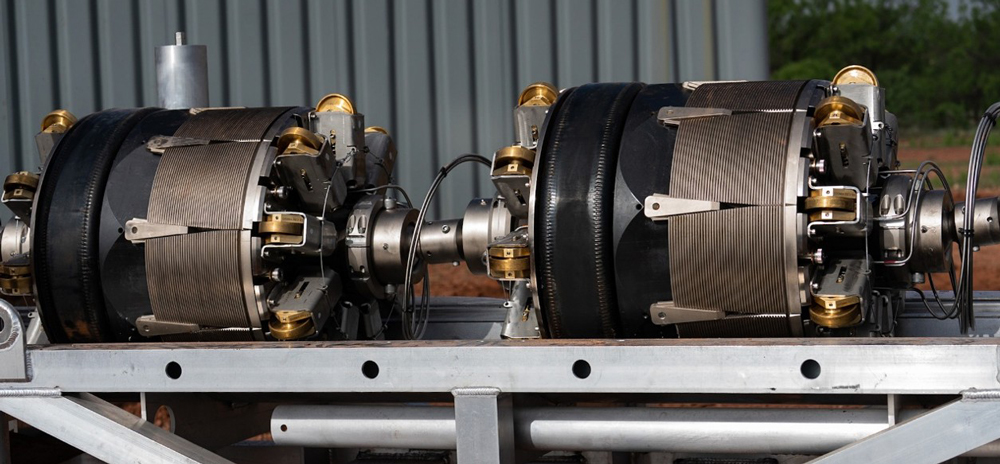
After completing the FAT, the tool proceeds to final assembly and project specific configuration. At this stage, the IIT is dressed in the designated pigging disc configuration tailored to the specific pipeline conditions.
The pigging setup is carefully engineered based on customer supplied data, past projects experience, validated calculations and results from 3D modeling and piggability studies. Factors such as pipeline ID variations, flow conditions, gas/fluid, distance, pipe components, frictional requirements and expected sealing performance are all considered to optimize tool pigging.
Once fully configured, the tool is secured/strapped within its transportation frame or shipping container, ensuring protection and readiness for mobilization at a site.
All project documentation, including approved procedures, engineering reports, checklists and test records, are finalized and compiled in a controlled project folder. This documentation package is issued to the field supervisor and accompanies the tool to the job site, ensuring that all operational activities are executed in accordance with approved engineering and procedural requirements (FIG. 4).
Shipment and Logistics
Upon the completion of final assembly, the IIT is prepared for mobilization to the project site. Transportation is accomplished in accordance with client requirements and project schedules, utilizing land, sea or air freight depending on location, urgency and logistical constraints. Air freight can be a significant added cost but in severe instances where the customer requires rapid deployment due to a crisis, the cost is insignificant.
All equipment is packaged securely within certified transport frames or containers to ensure protection during transit. Handling procedures, lifting points and transportation requirements are clearly defined to prevent damage to tools or equipment.
For international deployments, logistics planning becomes a critical component of project execution. Challenges may include customs clearance, import/export regulations, local labor laws and country-specific operational requirements. Delays or non-compliance in these areas can significantly impact project timelines. Some countries require the local workforce to comprise up to 50% of the crew.
To mitigate these risks, coordination between the vendor, client and logistics providers is essential. Proper documentation such as commercial invoices, packing lists, certificates of origin and temporary import documentation [e.g., admission temporaire/temporary admission (ATA) Carnet, where applicable] must be prepared in advance to facilitate smooth transit and site delivery.
Deployment
Field deployment begins with a pre-operation (pre-job) meeting, typically conducted at the operations base. During this session, the plugging crew is briefed by engineering and operations personnel on the project scope, execution plan, roles and responsibilities, safety requirements and operations procedure. This alignment ensures all personnel have a clear understanding of the operation prior to mobilization.
Following the briefing, the crew mobilizes to the job site. Upon arrival, the first critical task is the execution of a pre-launch checklist. This verification process confirms that the IIT remains in full operational condition following transport, with all systems, components and instrumentation functioning as intended.
Some countries or clients require the crew to obtain local medical certificates or client specific certification to be eligible to perform work in the country. Due to this, the crew might need to arrive a few days earlier to perform the required tests.
Site specific permitting requirements must be addressed before work can commence. Depending on the facility and scope, this may include work permits, hot work permits and cold work permits, as well as compliance with client and regulatory safety procedures.
In parallel, pumping services are mobilized and begin rig up activities, including the installation of temporary piping, hoses and associated equipment required for the pigging operation. In some cases, the operator may elect to utilize existing production flow to drive the tool through the pipeline. When this approach is used, pigging operations are typically conducted under direct supervision of the client to ensure adherence to operational limits and safety protocols.
Following successful pigging, the tool setting sequence is initiated. Before a setting command can be issued, the supervisor must log in using a project specific password to gain access to the setting and unsetting functions.
In addition, some plugging vendors incorporate a further layer of protection through a lock-out/tag-out (LOTO) feature. Prior to the project, a designated group of authorized personnel is identified and each individual is issued a personal access code (key) by email. Every person on this list must be present during the setting and unsetting processes. After the supervisor password has been entered, each of these personal keys must also be entered into the system. This provides a second level of operational safety and control.
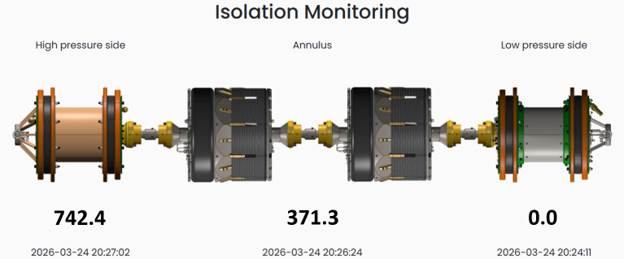
Once the tool is set and providing double block (isolation), it is monitored for a predetermined verification period, typically 4 hrs, although this may vary depending on client requirements and project specific guidelines. During this period, the customer is provided with access to an online portal where the tool status can be monitored live.
At the conclusion of the monitoring period, an isolation certificate is issued to the client. This certificate is signed by both the site supervisor and the client representative and serves as documented confirmation that a 100% double seal has been achieved. With this certificate in place, the client may proceed with the planned pipeline work.
Upon completion of the work scope, the tool is unset and then pigged back to the launcher or downstream to other facilities required by the client (FIG. 5).
Post Deployment
Upon completion of the project and return of personnel and equipment, a formal post-job debrief is performed. This session typically involves field crew, engineering, operations, project management and relevant support functions such as health, safety and environment (HSE) and human resources (HR). The objective is to review overall project performance and capture lessons learned.
The field supervisor leads the debrief, presenting a detailed explanation of the execution, including what performed as expected and where challenges or deviations occurred. Particular attention is given to any non-conformance reports (NCRs), which are reviewed together with engineering to identify root causes and implement corrective and preventive actions for future operations.
Following the debrief, a comprehensive project close-out report is prepared by the supervisor. This document summarizes the operation, including execution details, test results, anomalies and lessons learned. It is reviewed and approved by project management and engineering teams prior to submission to the client as part of the final deliverables.
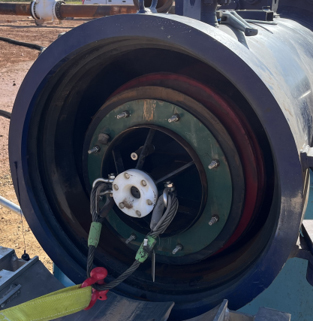
As a final step, the IIT undergoes complete disassembly, inspection and servicing. All components are evaluated for wear, damage or performance degradation. Serviced and certified parts are then green tagged and returned to controlled inventory, ensuring readiness and traceability for subsequent projects (FIG. 6).
Other Isolation Options
While launcher and receiver valve repair represents the most common application of IITs, their operational scope extends well beyond this use case. IITs are also deployed for midline repairs, hydrostatic testing, riser repair/modification, subsea tie-ins, emergency pipeline repair system (EPRS) and pipeline abandonment activities. The following sections present representative examples of these isolation applications.
Mid-Line Repair
Midline repair operations require the deployment of two IITs configured for opposing pressure directions. One tool is pigged in a reversed (180°) orientation relative to the other, enabling effective bidirectional isolation of the pipeline segment. This arrangement creates a zero-energy work zone between the tools, providing a safe environment for personnel to perform inspection, removal or repair activities (FIG. 7).

Hydrostatic Testing
IITs provide an effective option of hydrotesting a discrete pipeline section with one or more plug modules or tools, depending on the pressure required (FIG. 8).

Sometimes after an isolation, the upstream segment can be pressurized and tested to verify the integrity of the newly installed or modified components in compliance with governing codes and specifications. The solution is to deploy an isolation tool with three or more plug modules, two modules for the initial pipe isolation and a third or more module(s) for hydrotesting that is 180° flipped (FIG. 9).

Under Grade Isolation
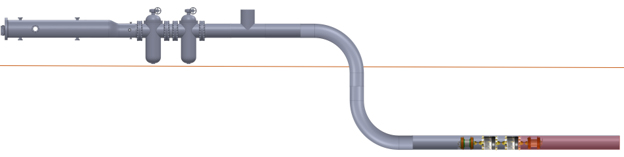
IIT enables pipeline isolation without requiring excavation. With ELF communication systems, operators can establish communication and control with the tool from above grade. This capability eliminates the need for costly and intensive time excavation while minimizing environmental impact and surface disturbance (FIG. 10).
Emergency Pipeline Repair System (EPRS)
An EPRS is a rapid response solution specifically engineered to restore pipeline integrity with unmatched speed, safety and cost efficiency. This turnkey solution minimizes downtime, lowers long-term maintenance costs and ensures the pipeline is back online quickly and effectively.
Phase 1: Engineering, Assembly and Tool Qualification
- Collect and review pipeline data, including P&ID diagrams, alignment sheets, ILI data and applicable technical specifications.
- Conduct a site visit to verify field conditions and obtain any missing or supplemental documentation.
- Perform engineering assessments, including stress validation, piggability analysis and finalize design drawings for client approval.
- Develop a coordinated emergency response plan outlining key contacts, communication protocols, equipment readiness, tool storage strategies and technician availability.
- An FAT is recommended but not required to validate tool performance and system readiness prior to deployment.
Phase 2: Tool Storage and Readiness
- Isolation tools and associated equipment are maintained in a state of readiness, either at the plugging vendor facility or at a customer designated location, to ensure rapid mobilization when required.
- A plugging technician will perform annual tool checks to ensure the tool is ready and charged for a potential deployment.
Phase 3: Emergency Mobilization
- Upon activation, trained technicians are immediately mobilized to the site with the required equipment and tooling.
- Field execution is initiated in accordance with the pre-established emergency response plan to minimize downtime and restore system integrity as efficiently as possible.
Takeaways
IIT has evolved from a niche, high-cost intervention into a mature and highly engineered solution that plays a critical role in modern pipeline operations. As demonstrated throughout this article, successful execution is not the result of a single tool or technology, but rather the integration of rigorous engineering analysis, disciplined operational planning and robust risk management practices.
From initial data collection and stress validation through piggability assessment, controlled testing and field deployment, each phase introduces its own technical challenges and potential failure modes. The ability to systematically identify, evaluate and mitigate these risks is what ultimately ensures safe and reliable isolation under live pipeline conditions. Attention must be given to structural integrity, sealing performance and operational control, especially in thinner walls or geometrically complex systems.
Equally important is the continued advancement of enabling technologies such as ELF communication, which has removed historical limitations associated with hydraulic control systems and expanded the operational envelope of IITs. These innovations, combined with improvements in design, manufacturing and execution methodologies, have made IIT not only technically viable but often economically advantageous compared to traditional shutdown approaches.
Despite these advancements, industry wide understanding remains limited, often constrained to proprietary knowledge and vendor-driven information sharing. It is the intent of this series to contribute to a more transparent, engineering focused discussion of IITs, providing operators, engineers and stakeholders with the technical insight required to make informed decisions.
As pipeline infrastructure continues to age and operational demands increase, the importance of safe, efficient and non-intrusive isolation methods will only grow. IIT stands as a key enabling technology to meet these challenges, delivering operational continuity without compromising safety or integrity.
This article represents the first installment in a multi-part technical series. Subsequent sections will build on the foundations established here. These articles will provide a comprehensive, system-level understanding of IIT from fundamental operating principles through detailed subsystem functionality and control methodologies.
About the Author
FRANK SOENDERVIK is a pipeline isolation and pigging specialist with extensive hands-on experience in IIT, tool development, field operations and technical project execution. His work focuses on advancing safe and reliable isolation methods for pressurized pipeline systems, including double block and monitor applications, piggable isolation tools, launcher and receiver operations, and control module development.
Soendervik is closely involved in the development of Pipeline Ultraisolation Group’s IIT, combining practical field knowledge with engineering-focused problem solving. His experience includes tool testing, operational procedures, pressure monitoring, tracking systems, animation and visualization of tool sequences, and technical communication for customers and industry stakeholders.
Through his articles and technical content, Soendervik aims to make complex pipeline isolation concepts easier to understand for operators, engineers, project teams and the broader public. His goal is to help improve awareness of how modern IIT work, how they are tested and how they can support safer pipeline maintenance and modification work.