
New Technologies Advance Pipeline Monitoring, Automation and Energy Efficiency
Sonardyne launches Observer for intelligent subsea monitoring
Underwater technology specialist Sonardyne has launched Observer, a new advanced monitoring system for real-time integrity management of subsea infrastructure across the offshore energy industry. Observer combines high- and low-frequency motion and position monitoring, powerful in-built analytics and wireless communications to deliver live insight into how subsea assets are truly behaving.
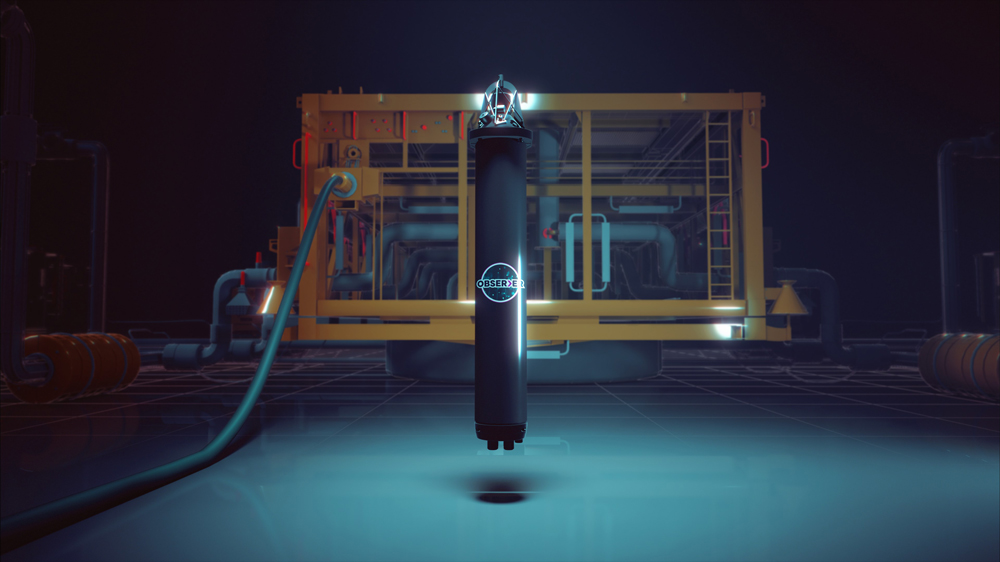
This enables unseen process and environmental challenges—from pipeline expansion and contraction to vortex and flow induced vibration—to be addressed before they become a problem, lowering risk, intervention and costs, while extending asset life.
Observer is remotely operated vehicle (ROV)-deployable, can interface with various third-party sensors and can be deployed for up to 10 yrs at 3,000 meters (m). Observer is designed for use on all subsea assets, through the water column, including pipelines, risers, moorings, umbilicals, wellheads and associated infrastructure, helping integrity managers to reduce uncertainty and strengthen decision-making.
The system is easily user-configurable, putting control in the asset managers’ hands, while data offloading is available on demand through Sonardyne's trusted underwater communications.
For more information, visit: https://www.sonardyne.com/product/observer-intelligent-subsea-asset-monitoring/
Sapphire, Anax deploy pipeline-based power system for data centers
Sapphire Technologies has partnered with Anax Power to deploy a system that converts natural gas pipeline pressure into electricity and cooling for distributed data centers, targeting the growing demand from artificial intelligence (AI) and high-performance computing.
Under the agreement, Sapphire will supply its FreeSpin® in-line turboexpander, which Anax will integrate into a co-located data center facility. The system is designed to capture excess pressure from gas pipelines and convert it into usable energy without combustion.
Anax will build, own and operate the project, with commissioning expected later this year. The approach places modular data centers alongside existing pipeline infrastructure, avoiding the need for new transmission buildouts while tapping into existing energy flows.
By recovering pressure energy that would otherwise be lost, the system generates electricity while simultaneously producing cooling capacity to manage server heat loads. Sapphire said the integrated system can deliver up to 3 megawatts (MW) of electricity and 35 MM British thermal units (Btu) of cooling capacity per installation.
The companies said the model could be replicated across thousands of pressure-regulating stations throughout North America’s gas transmission network, allowing for faster deployment of distributed data center capacity.
For more information, visit: https://www.anaxpower.com/technology/
LiveEO debuts 3D satellites for pipeline and infrastructure monitoring
German technology firm LiveEO has launched a high-resolution satellite constellation designed to monitor pipelines, rail networks and other critical infrastructure assets, expanding commercial access to infrastructure-focused Earth observation data in Europe.
The constellation, named Twinspector, is built to deliver large-area, high-resolution, three-dimensional (3D) imagery tailored to the energy and transportation sectors. LiveEO said the system is designed to address growing demand for satellite-based monitoring of critical infrastructure, particularly in energy security and climate resilience applications.
The company said the constellation was developed in response to customer demand for more specialized, infrastructure-grade satellite data. LiveEO has previously provided AI-powered analytics to major infrastructure operators, including Deutsche Bahn and E.ON.
Twinspectors’ satellites are being manufactured through a domestic German supply chain, including Reflex Aerospace and other partners. According to LiveEO, the constellation is capable of capturing high-resolution 3D imagery at scale, with onboard AI processing that enables rapid analysis directly in orbit.
The satellite carries a camera system significantly larger than traditional CubeSat-based designs and uses onboard graphics processing units (GPUs) to process data in space before transmission. From a geopolitical standpoint, LiveEO has positioned the constellation as a step toward independent European access to high-resolution satellite data, particularly as infrastructure monitoring and security concerns grow.
The system is capable of supporting applications ranging from vegetation encroachment management along rail and pipeline corridors to broader infrastructure and environmental risk assessments.
For more information, visit: https://www.live-eo.com/solutions/industries/gas-pipeline-operations
AUMA launches explosion-proof remote control for actuator operations
AUMA has introduced a new explosion-proof remote control designed to allow onsite personnel to operate actuators safely and efficiently from a distance, reducing the need for manual access in hazardous or hard-to-reach locations.
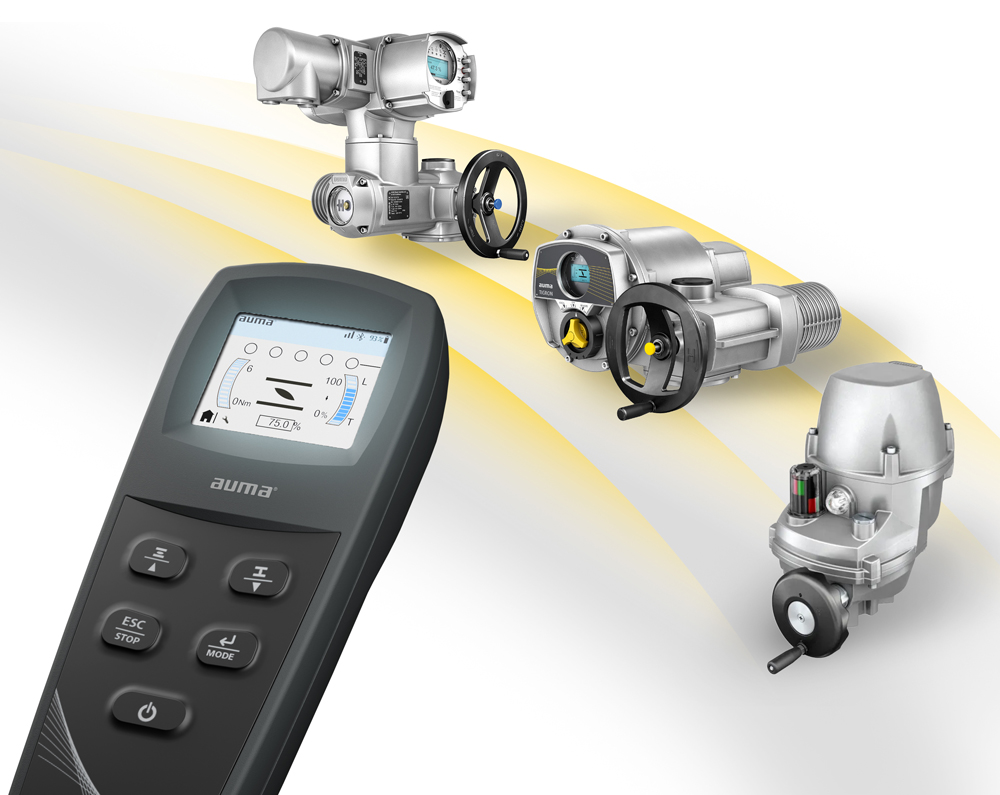
The RSTX 100 remote control is ATEX- and IECEx-certified as intrinsically safe for use in potentially explosive environments. Using Bluetooth connectivity with a range of up to 20 m (66 ft), operators can control AUMA actuators while maintaining physical separation from equipment.
The device is intended for applications where actuators are installed in confined spaces, pits or elevated positions. A large, high-resolution color display provides full communication feedback, including actuator responses, allowing users to complete tasks without climbing ladders or entering restricted areas when the actuator’s own display is not visible.
Designed for industrial field use, the RSTX 100 is rugged and ergonomically shaped for operation while wearing gloves. Clear menus and intuitive text allow operators to perform a range of functions, including opening and closing valves, configuring actuator parameters, setting valve end positions, updating actuator firmware and retrieving actuator log data for diagnostics within CORALINK, AUMA’s digital ecosystem.
The remote control is compatible with AUMA’s current explosion-proof actuator ranges, including PROFOX, TIGRON, and SAEx and SQEx actuators equipped with ACExC 01.2 controls. The standardized interface allows operators to manage different actuator types in a facility using the same operating method, reducing training requirements and supporting faster daily operations.
For more information, visit: https://www.auma.com/en_US/product/overview
Oxford Flow enters Japan through valve distribution deal
Oxford Flow has entered the Japanese market through a new distribution and collaboration agreement with VENN, targeting growing demand for gas and water infrastructure upgrades across the country.
Under the agreement, VENN will distribute Oxford Flow’s full product portfolio in Japan, giving local operators and engineering, procurement and construction (EPC) firms access to the company’s valve and regulator technologies. The initial focus will be on pressure regulators for gas applications and liquid regulators for water systems.
Japan has been investing heavily in the modernization of aging infrastructure alongside wider adoption of advanced control and automation technologies. These trends have driven demand for higher-performance flow control equipment across both the gas and water sectors.
Oxford Flow said the partnership aligns with its strategy of expanding internationally through established local partners, allowing the company to provide in-market technical support and customer engagement in regions with complex regulatory and engineering requirements.
For more information, visit: https://oxford-flow.com/our-products/
Towngas deploys drones to inspect high-pressure gas pipelines
Towngas has implemented drone technology to improve inspection and monitoring of its outdoor high-pressure gas transmission pipelines, aiming to strengthen system reliability amid increasingly frequent extreme weather events.
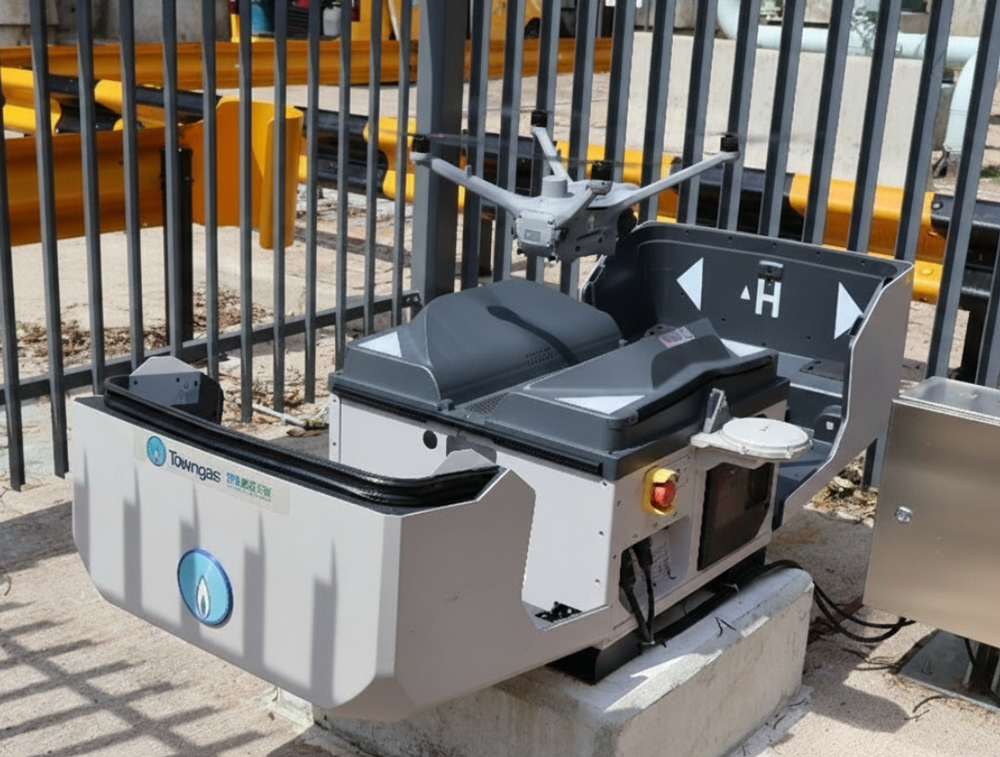
The utility said the drones are equipped with laser-based gas detection and 3D terrain comparison technology, allowing crews to conduct rapid aerial inspections along pipeline routes. If a potential gas leak or damage is detected, an automated report is generated to trigger follow-up repairs.
Before the drone program, inspection teams were required to conduct routine onsite patrols and cathodic protection testing at least once every 3 mos, with additional inspections after typhoons and heavy rain. Towngas said the new approach has significantly reduced the time technicians spend navigating difficult terrain while improving the precision of inspection data. The move would enable drone inspections to cover approximately 9 mi (15 km) of pipeline in a single operation.
For more information, visit: https://www.towngassmartenergy.com/en/