

Venture Global, Louisiana Clash With Permitting Delays as LNG Demand Surges
Venture Global CEO Mike Sabel said permitting remains the primary barrier to expanding U.S. LNG capacity, even as demand grows and Louisiana continues to attract major investment.
By Mary Holcomb, Digital Lead
HOUSTON (P&GJ) — Venture Global CEO Mike Sabel said permitting remains the biggest hurdle to expanding U.S. LNG capacity, even as demand continues to grow, speaking at CERAWeek by S&P Global in Houston on March 24.
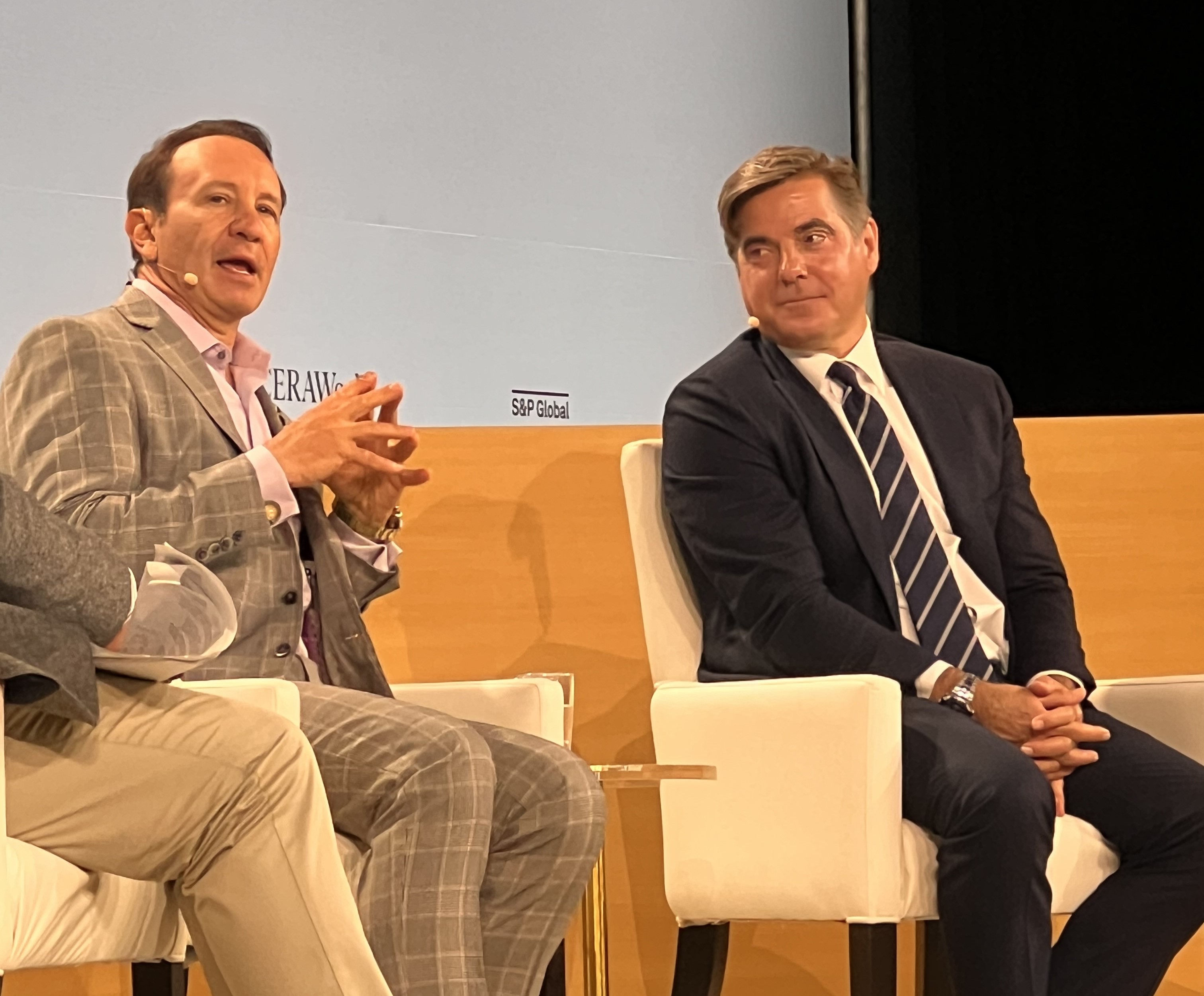
Alongside Louisiana Gov. Jeff Landry, Sabel said the industry’s ability to bring new supply online is still constrained by the complexity and timeline of the permitting process.
“Permitting… is the primary impediment to bringing more capacity online,” Sabel said.
While Louisiana has positioned itself as a leading LNG hub, Sabel said the process remains highly complex, often involving tens of thousands of pages of analysis and frequent changes as projects move forward.
Much of that process also extends beyond initial approvals, with projects frequently facing legal challenges that can delay timelines even after permits are issued.
The comments come as Venture Global continues to scale rapidly. Across its Calcasieu Pass, Plaquemines and CP2 projects, the company is building toward roughly 70 million metric tons per year (MMtpy) of capacity, with plans to reach more than 85 MMtpy within the next few years.
Sabel said the company has been willing to move ahead of approvals to keep pace with demand, committing billions of dollars before receiving final permits.
Before advancing CP2, Venture Global had already invested roughly $6 billion, with total pre-FID spending across its projects approaching $10 billion.
Despite those challenges, Louisiana continues to stand out as a favorable environment for LNG development.
Sabel said the state’s approach to permitting and economic development has helped support large-scale investment, particularly through coordination across agencies and a focus on treating companies as long-term partners.
Gov. Landry said the state has worked to streamline processes by centralizing permitting coordination and pushing agencies to move faster.
“We want everyone to talk to one another… and move at the speed of life,” Landry said.
He added that delays in permitting directly impact project economics, increasing costs and slowing investment.
At the federal level, both speakers pointed and applauded to efforts by the Trump administration to accelerate approvals, particularly for large-scale energy projects, but said coordination between state and federal agencies remains critical.
Sabel said the complexity of the process, rather than any single permit type, is the primary challenge.
Beyond permitting, Sabel highlighted continued strength in LNG demand, with buyers seeking a mix of long-term and shorter-term contracts.
Venture Global is currently marketing supply across multiple contract lengths, including 20-year agreements as well as shorter-term deals, supported by excess production capacity and commissioning volumes.
Sabel said demand remains strong across all contract durations, with no slowdown in long-term agreements.
For both the state and industry, the focus remains on maintaining momentum.
Sabel said Venture Global’s priority is continuing to bring capacity online while navigating regulatory complexity, while Landry emphasized the state’s role in ensuring permitting processes keep pace with investment.