

Towngas Deploys Drones to Inspect High-Pressure Gas Pipelines
Towngas has introduced drone inspections for high-pressure gas pipelines, using laser detection and 3D terrain analysis to speed damage assessments and improve safety after extreme weather.
(P&GJ) — Towngas has rolled out drone technology to improve inspection and monitoring of its outdoor high-pressure gas transmission pipelines, aiming to strengthen system reliability amid increasingly frequent extreme weather events.
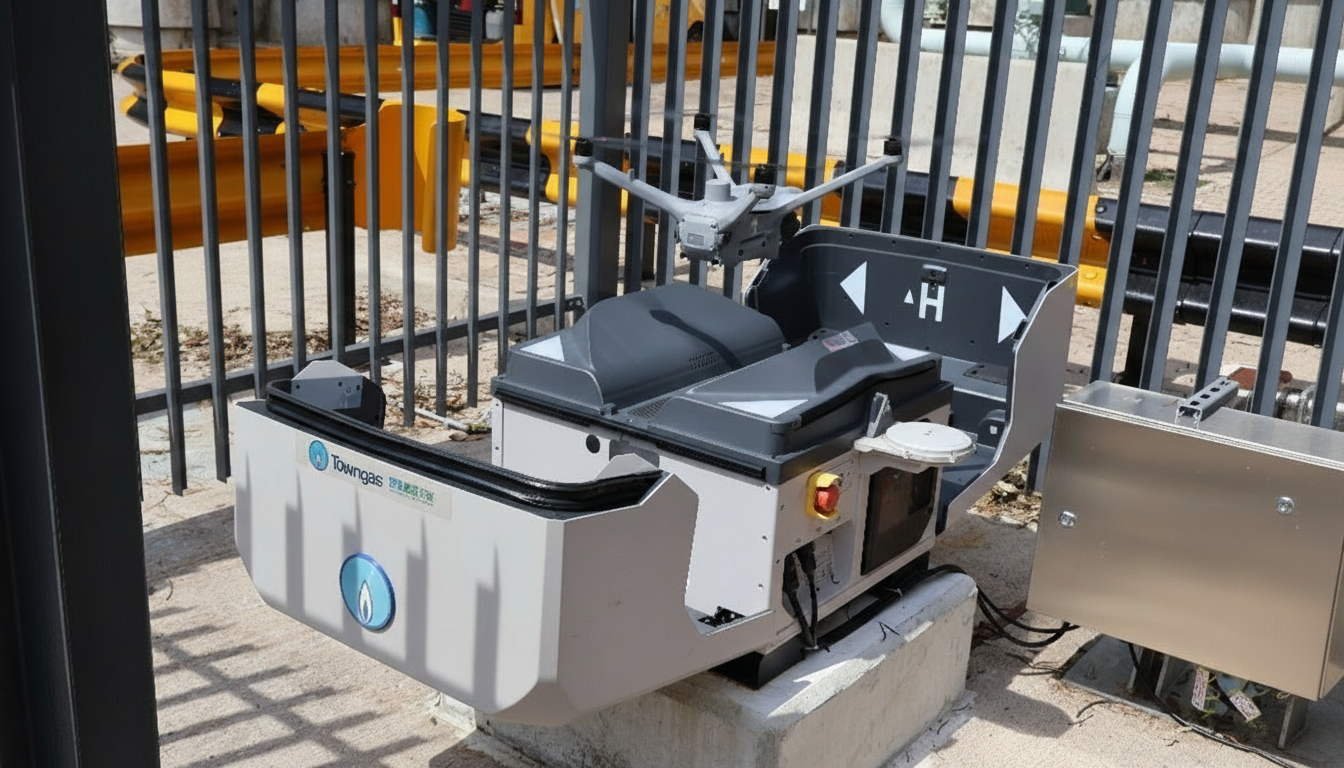
The utility said the drones are equipped with laser-based gas detection and 3D terrain comparison technology, allowing crews to conduct rapid aerial inspections along pipeline routes. If a potential gas leak or damage is detected, an automated report is generated to trigger follow-up repairs.
Before the drone program, inspection teams were required to conduct routine on-site patrols and cathodic protection testing at least once every three months, with additional inspections after typhoons and heavy rain. Towngas said the new approach has significantly reduced the time technicians spend navigating difficult terrain while improving the precision of inspection data.
“The most challenging part is conducting inspections after typhoons or torrential rain,” said Dicky Chan of Towngas’ Transmission Operation Department, one of the first employees trained as an advanced-rating drone pilot. “With this drone, we can arrange aerial photography immediately and monitor the situation around the pipeline area, which gives us peace of mind.”
Towngas said the drones can also be used to assess surrounding conditions before repair work begins, helping crews better understand site risks in heavily forested areas.
According to Jacqueline Hui Ting-yan, assistant general manager of transmission operations, a single hillside inspection route that previously took up to 16 hours over two days can now be assessed far more efficiently. “This drone has enabled technicians to focus on other important tasks,” she said.
Hui added that Towngas plans to expand its drone program by participating in a government sandbox initiative that would allow Beyond Visual Line of Sight (BVLOS) operations. The move would enable drone inspections to cover approximately 9 miles (15 km) of pipeline in a single operation.